Category: Gayle Malloy

.

Rebirth

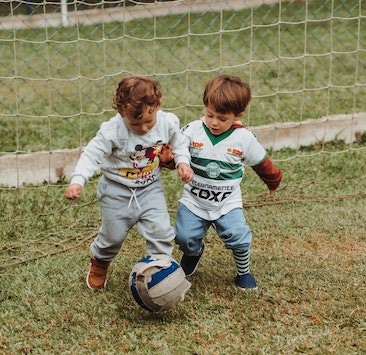
The photograph shows two little boys, arms encircling each other, smiling innocently into the camera. The boys’ cherubic features, once sharp and clear, are now muted by a reddish tinge as if the entire photograph’s been dipped in red wine. Maggie snorts with frustration as she moves the photograph closer, peering intently, desperately trying to wish the image into clarity.  Every photograph in the album has the same reddish hue. The cherished memories of her boys fading into oblivion. The gentle tapping of a branch against the window catches her attention, she smiles, then whispers, ‘’I’m coming.’’

Turning the pages of the album, Maggie contemplates the baby pictures pressed beneath the aging plastic sleeve. The newborns, legs curled up, arms akimbo, reminding her of two plucked chickens. As she fumbles with the album, Maggie attempts to squeeze the photograph out from under the plastic’s vice-like grip. Probing between the photograph and the plastic she chides herself with, ‘’A few dollars saved. Why on earth did I buy such cheap film? I should have bought the Kodak.’’ But Maggie already knows the answer to her question. Cheap film meant money saved and money saved meant special treats for the boys, especially their favorite, Apple Whizz Fizz.

Laughing to herself, she recalls the boys jumping up and down in front of her and squealing with excitement as they tried to guess which hand held the Apple Whizz Fizz.

            ‘’Which hand?’’

            ‘’That one, Mummy?’’

            ‘’You sure?’’

            ‘’Yes, that one, that one.’’

Such wonderful days filled with giggles and laughter and Apple Whizz Fizz coated teeth.

Her boys spilling Whizz Fizz on the kitchen floor and her pretending to be angry. Maggie tasting the Whizz Fizz and being surprised by the sudden tingling burst of flavor on her tongue. Such wonderful days when she made them happy with just a packet of Apple Whizz Fizz.

At last the picture is free. Pressing the image to her lips, Maggie bestows a kiss, a gentle benediction on the two babies. With closed eyes she recalls the pulling sensation as her breast let down her milk for their suckling, their eyes staring up at her, taking in her every nuanced expression. Her fingers long to touch the soft down of their hair.

The staccato rhythm of the branch against the window pane breaks her reverie. She slips the photograph back into its sacred place amongst the other beloved photographs and turns to the last page in the album. This page holds a newspaper cutting yellowed with age.

‘’FRIENDS’ PRANK TURNS TO TRAGEDY:

An April Fools’ Day prank by a group of friends turned to tragedy when a boy drowned trying to save his twin brother at Scarborough Beach. Both boys died in the incident.’’

Closing the album, Maggie walks outside into the back garden and smiles lovingly at the two huge apple trees standing sentinel on either side of her window. Each tree’s branches reach out, embracing the other, creating a sanctuary of shade and sweet perfume. One branch scrapes against the window, making a tapping noise in the evening breeze. The trees are thirty years old, their trunks gnarled with age, but their branches heavy with the gift of apple blossom.

 Maggie pats the nearest tree’s trunk, her aged skin rubbing against the dry nodules of bark. Lowering her body, her fingers digging into the fragrant earth as she touches the exposed root system, Maggie leans gently against the trunk. She recalls the night she dug the two holes, the grief still alive and jagged in her chest. Placing a snippet of their cherished baby hair in the pungent earth of each hole, Mikey on the left and Marty on the right. Covering each son’s hair with a sapling apple tree bursting with life. For thirty years she watched the saplings grow into these mighty apple trees towering above her, apple trees that can live for one hundred years.

 As the evening breeze whispers its promises of the night, Maggie leans against the trunk of her beloved tree and softly hums to herself the ancient pagan chant of rebirth and hope, ‘’All that dies shall be reborn.’’

Picture free download by Luana Freita from Pexels
A lovable old lady

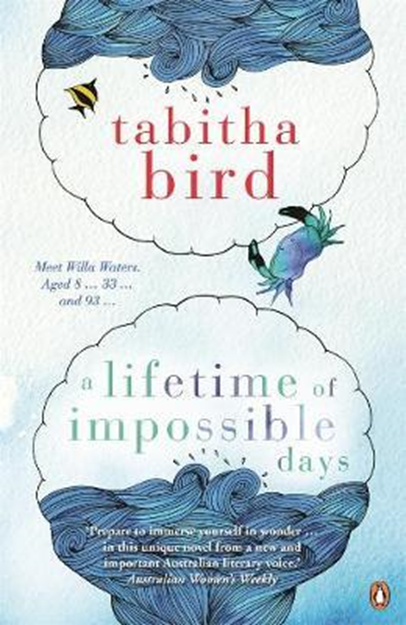
It is not often that an author manages to create such a feisty and down right lovable old lady as Willa in Tabitha Bird’s ”A Lifetime of Impossible Days”.

We meet Willa at age 8, 33 and 93, but it is the 93 year old Willa who’s mischievous antics so easily capture the reader’s heart. Willa’s sole purpose seems to be to frustrate her carer. After deliberately stating she would like to purchase a pair of snake print heeled boots she enjoys the reaction of her carer – “Her face takes on shades of red and her eyebrows knit together. Lovely. My work here is done.”

Although Willa is playful and funny there is something important that she must remember. But what is it? Throughout the book the reader is urging Willa to remember but the memory is just out of reach.

A Lifetime of Impossible Days is a wonderful, engaging read about a serious topic. Tabitha Bird has created a character that is not only fun to read but also easy to fall in love with.

A Lifetime of Impossible Days

Lost in Time

It’s spine

now brittle with age

crackles

as I open her diary

to indecipherable scrawl.

Sweet perfume still lingers

a wisp of the past.

White hair on pillow,

eyes vacant,

she smiles at me,

a stranger to her now.

She is free.

Travelling  

on pathways anew,

forever

lost in time.

Photograph taken by shironosov purchased from iStock

A Song at Stonehenge

The crisp morning air stung my face as I walked within the inner circle of Stonehenge.

My guide, a druid, had been given private access before the normal rush of tourists and I had come with a small group to experience the energy of the temple site.

Standing between two ancient sarsen stones I felt a calm peaceful energy. The air seemed thicker, yet I felt protected, as if nothing could harm me in this enigmatic place.

My guide asked if we would like a personal item given a druid blessing and each of us lay our item on the grass. My personal item was a moonstone pendant given to me for Mothers’ Day by my son. As the guide started the blessing, one of the members of the group began singing in Gaelic. Her lilting voice seemed to encircle the monument, connecting us with the ancient stones and each other.

When her song ended, it was as if we had been spellbound, and were now returning to our ordinary existence.

Stonehenge

Photograph by Nina Briski from Freeimages

Pelicans, Dolphins and feeding time at Monkey Mia

Located in the Shark Bay World Heritage Area of Western Australia, Monkey Mia has white sandy beaches and water teeming with wildlife.

One of the main attractions are the bottlenose dolphins that visit the area usually three times a day, swimming right up to the water’s edge. Under the supervision of a National Park Ranger, some visitors are given fish to feed the dolphins who come right up to them and take the fish from their hands.  It’s both a joyful and impactful experience as humans and dolphins accept and trust each other.

I came to Monkey Mia to connect with the element of water and although I enjoyed interacting with the dolphins, sailing on a catamaran in search of dugongs, manta rays and green turtles and paddling in its clear blue waters, the thing I most enjoyed was spending time with the pelicans.

I never realized that pelicans could be so cute.

Whilst the dolphins are attracting everyone’s attention, the pelicans stand in a straight line, their beaks down, their big eyes looking upward, and wait patiently for a fish from one of the Ranger’s buckets. To see a row of pelicans standing in line like bored school children waiting to go into class, warms the heart and brings the broadest of smiles to a face.  They look adorable.

Each day I’d see the pelicans swimming in the water and either resting or walking along the beach, content in the knowledge that they were safe. Emus and their chicks walked through the resort, and in the evenings I would lie upon the beach, looking up at the night sky with its myriad of stars and know how lucky I was to be in such a peaceful, harmonious environment.

Bottlenose dolphin

Monkey Mia information

Pelican Photograph by Craig Elliot from Freeimages

Dolphin Photograph by Stacy Brumley from Freeimages

Cheezels, red wine and a ‘Croning Ceremony’ at Mullaloo Beach

In the past we used to celebrate the many stages of a person’s life journey from birth through to old age.

Some traditions are still carried out in different countries. In China when a baby turns 100 days old there is great celebration as it represents a wish that the child will live to be 100 years old.  In Mexico when a girl turns 15 her coming of age is celebrated with a ‘quinceanera’ which begins with a mass in church followed by dinner and dancing with friends and family.

But what about old age? We no longer tend to celebrate the contributions of knowledge and wisdom that accumulate as we stumble through life.

I was extremely fortunate to be given a ‘Croning Ceremony’ by a group of friends for my 50th birthday. A ‘crone’ is a woman who is 50 years old and it celebrates and recognizes her as an elder in the community and a keeper of wisdom.  

For the ceremony, we drove down to Mullaloo Beach in Western Australia in the evening with a large packet of Cheezels (cheese flavoured circle chips which are tasty and the shape allows you to put your fingers in the holes and wear them like large yellow rings) and a bottle of red wine to share. We also had flowers, three ribbons and candles to light the summer’s evening. We sat in a circle on the beach and watched the sun go down and listened to the whisper of the waves gently lapping on the shore.

The ceremony was simple, but I found it to be extremely profound and nurturing. Each friend plaited three different coloured ribbons and as they did, they shared with the group what they loved, valued and respected about me. Once the person had finished talking they passed the ribbons on to the next person in the circle who continued the process. I was humbled by the depth of feelings that they shared and was surprised when the ribbons were passed around a second time. We live our lives unaware of the influence we have on other people. My ‘Croning Ceremony’ allowed me to see myself through the eyes of others. It was a magical and profound experience.

Once the ribbons were completely plaited, it was given to me as a gift of remembrance. Infused with each person’s well wishes and the happy memory of a nurturing and fun night, this simple gift is one of my most treasured possessions. After all the Cheezels and red wine had been consumed, we placed the flowers on the water and watched as the waves carried them away to new destinations.

So why am I sharing this story with you? I’m sharing this story because as we all stumble through life doing our best, it can be a wonderful gift to see yourself through the eyes of others. Don’t wait until someone turns 50 to tell them how you feel about them. Tell them now.

What is a Cheezel?

Photograph by Tetyana Kovyrina from Pexels

A Communal Yurt under the White Horse of Uffington

In our lives we mix with all sorts of people. Some are interesting, some less so.  If we get the chance to be in a group of creative, intelligent people I think we should grab that opportunity and run with it.

I had the good fortune to experience living in a communal yurt under the White Horse of Uffington in Oxfordshire, England, and being in the company of some exceptionally talented and creative individuals.

The communal yurt housed men, women, children and dogs.  Everyone had their own sleeping bag and there was a wood fired heater in the middle of the yurt to ensure that we didn’t get too cold. We all had a job to do and I chose to assist in meal preparation which was quite easy. The meals were vegetarian, wholesome and plentiful. During the day there were workshops to attend or activities in which to participate.

But it was during the evening that everyone gave full expression to their creativity and talents. There were fire jugglers, musicians, storytellers, singers and even a harp player. Sitting around the campfire and watching such talented and creative individuals relate stories from the past or entertain with their creative genius, I felt as if a part of me that had been hungry all my life, was suddenly receiving sustenance. Everyone gave of their talents freely, without comparison, without judgement. It was a wonderful experience.

Our ancestors sat around campfires and told stories. In the beginning they were probably about the day’s hunt, but as we evolved so too did the stories. The stories we tell today are often told in the passive medium of film or television, but let’s never forget how dynamic and satisfying it is to actually participate in theatrical interpretation or in simply creating a new story on the spot for a rapt audience.

Against All Odds, England’s Massive Chalk Horse Has Survived 3,000 Years

When a story lingers in your mind

Sometimes a simple story, gently told, can touch you in a way that lingers long after you’ve finished reading. Such a story is ‘The Travelling Cat Chronicles’, a beautifully written novel by Hiro Arikawa exploring the friendship between Nana the street cat and the kind-hearted Satoru Miyawaki.

The journey in the novel is a universal one of friendship, love and loss. Although the narrator is Nana, we learn of Satoru’s young life, his challenges and the value of friendship.

There is one instance in the novel where Nana visits a household which has an old-fashioned cathode-ray tube television and he is impressed by the ‘box’ that makes his ‘tummy feel toasty’. He bemoans the fact that his television is ‘thin and flat like a board’.  I can remember a friend’s cat who always lay on top of their old-style television. He was a friendly cat who obviously had designated the top of the television as his territory. One day he vomited up a fur ball which fell through the grooves in the back of the television causing the screen to go blank. Unfazed by this occurrence, the family patiently waited until the fur ball dried out inside the television, knowing that as soon as this happened the television would work again, and it did. It was interesting that if one of the children had done this, they would have received a telling off, but because it was the cat, all was forgiven.

In the novel, Nana is completely loyal to Satoru saying, ‘For ever and ever I am your cat.’  If you have ever taken in an elderly stray cat you will know the truth of this statement. I discovered an old white cat hiding in my back garden over a period of days. After taking her to the vet to see if she had an owner (she was unregistered), having the vet sort out her health issues (a costly exercise), I registered her as my own and adopted her. I named her Googles because she was cross eyed and although she was appreciative of me feeding her and looking after her, I could tell that she was missing the person that she loved, her owner.

This novel isn’t just for animal lovers, it’s the story of life with all its complications and regrets, and the joy that can be experienced just from living each day as it comes.  

A Play in Findhorn

Would you ever pay someone so that you could work for them? I did. I wanted to work the land in Findhorn and for a modest fee I worked in their vegetable garden.

As Findhorn is an eco-village in Scotland, it would have been hypocritical of me to catch a plane and so I travelled by ferry from Dublin to Holywell in Wales, caught various trains through England and Scotland until I arrived in Forres and finally caught a taxi to Findhorn. It was all rather wonderful. I like trains, you get to sit next to interesting strangers, have interesting chats and then get off at your station and wave them goodbye. Hats off to the Scottish Railway, having travelled on many trains in different parts of the world, the Scottish Railway is the Best.

So why did I travel to Findhorn? I wanted to be a part of their community, their commitment to sustainability and to experience working the land in collaboration with the intelligence of nature.

My timing was perfect, arriving prior to their Harvest Festival and enabling me to not only work the land but to participate in the actual Festival itself. Clad in black wellington boots and a yellow raincoat I worked in the vegetable garden and when it came time for the Harvest Festival I helped to decorate the cart in which the produce would be taken to the kitchen. The whole experience of working the land and participating in the Harvest Festival deepened my sense of reverence and connection to nature.

One evening I attended a play in the Universal Hall. If you’ve ever been to Newgrange (a megalithic passage tomb built about 3200 BC) in Ireland you would have noticed how the ancient builders placed the stones to create the inner passage and corbelled roof. The Universal Hall has a similar geodesic roof construction.

Sitting in this magnificant building and watching the play unfold, the sense of connection between the actors and the audience was almost tangible. We were living the experiences with the actors. We were feeling their pain.  When the play ended, the actors with the writer and the director, invited the audience for a drink and a chat in a nearby cafe. We moved to the café and the audience members immediately asked the writer about his inspiration for the play. He spoke of an article he had read and how it had moved him to share the story with others. The actors shared how they had breathed life into the characters and the director spoke of his craft, and also the strategies he had used to get funding to take the play to the Edinburgh Fringe Festival. It was a friendly, welcoming atmosphere where everyone felt safe to be candid, both in asking questions and in answering them.

Walking back to my accommodation, I recalled being in a Q&A session for my own play in Connecticut and how forced and unnatural it had all been. Sitting on the stage whilst the audience asked questions, there had not only been a physical distance but also a psychological one. Here in Findhorn, we had all huddled together, coffee in hand and talked about the craft of writing like old friends at a reunion.

As a playwright I don’t have a say on how a Q&A session can be run, but if ever I do, I will revisit the evening at Findhorn.

Findhorn Foundation

The Research Labyrinth

Have you ever been in the middle of writing, had to check an item on the internet for accuracy, and then found yourself wandering happily down a labyrinth of interesting facts?   

A pangolin wandering down a path looking for interesting bugs

I needed to find out what a pangolin eats for inclusion in a story I was writing.  I always check at least three reputable sources when I’m looking for information as anyone can create a web page and put misinformation on it.

On Save Pangolins I discovered pangolins eat ants and termites, supplemented by larvae, worms, flies and crickets. By double-checking this information on The National Geographic and World Animal Protection and Save Vietnam’s Wildlife I was able to confirm the information was supported by credible sources.

It should have taken me ten minutes.  One hour later I was still jumping from one site to the other, reading about animal rescue and eventually ended up adopting a pangolin called Polly from Save Vietnam’s Wildlife.

In the wild pangolins are quite invincible. They roll up into scale-covered balls to protect themselves from predators who bat them away in confusion. Although they look like a reptile, they are a mammal. Their babies ride around on their mother’s tails and they sometimes walk on their back legs.

Humans are their biggest threat. Pangolins are one of the most trafficked animals. Traditional medicine shops charge $600 for a kilo of their scales and restaurants charge $350 a kilo for their meat. Their blood is also used in traditional medicine.

Sometimes the research labyrinth mobilises us to take action, if not at least we become more aware.

Photograph by 2630ben purchased from iStock